 MBSE
MBSE
Wind turbines are machines designed to harness the kinetic energy of the wind and convert it into electrical energy. They are a form of renewable energy technology, as wind is an abundant and naturally occurring resource. Wind turbines are typically installed in areas with consistent and sufficient wind speeds to generate electricity efficiently. Moreover, wind turbines have played a significant role in the UK's energy landscape. The UK has been one of the global leaders in the deployment of wind energy, both onshore and offshore. The usage of the turbines in the UK and all over the world has steadily increased over the years due to various factors, including government support, advancements in technology, and a strong commitment to renewable energy.
The system modelling of wind turbines in Dymola is a great option as it provides a comprehensive and dynamic representation of the entire wind turbine system. By integrating the mechanical, electrical, and control components, Dymola allows engineers to analyse the turbine's performance under various conditions, optimise design parameters, and assess control strategies. In this blog post I will be explaining how to build a basic Wind Turbine System model and I will be integrating the model into a larger system model of the Water Pumping from the Well that I talked about in my previous blog post.
The model
The wind turbine system is a sophisticated integration of mechanical, electrical, and control components, purpose-built to harness the power of the wind and convert it into eco-friendly and sustainable electrical energy. In this blog post, I will provide a step-by-step demonstration of how to model each component, showcasing the intricacies of their interactions and functionality within the overall system.
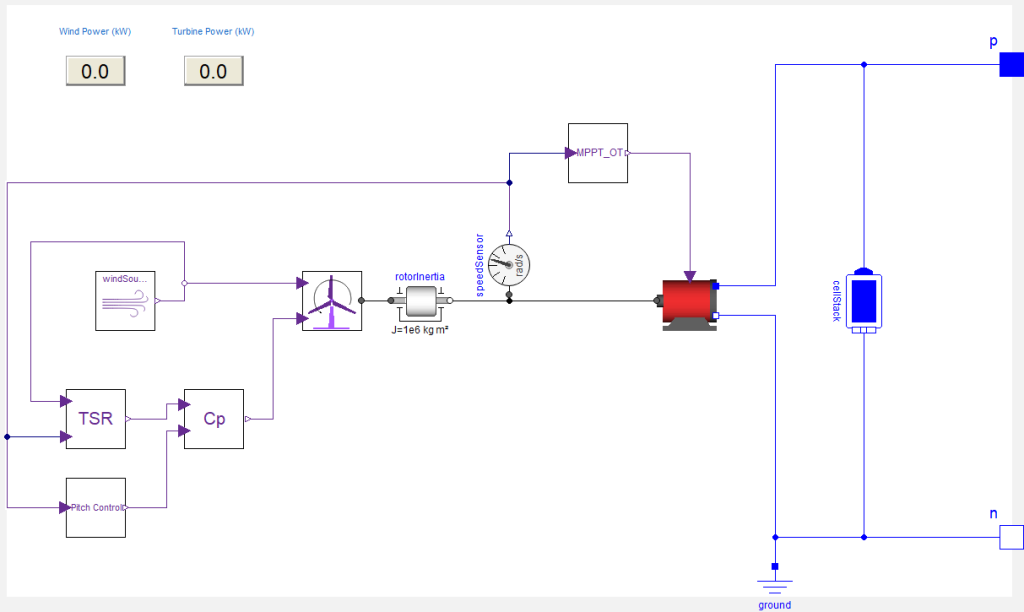
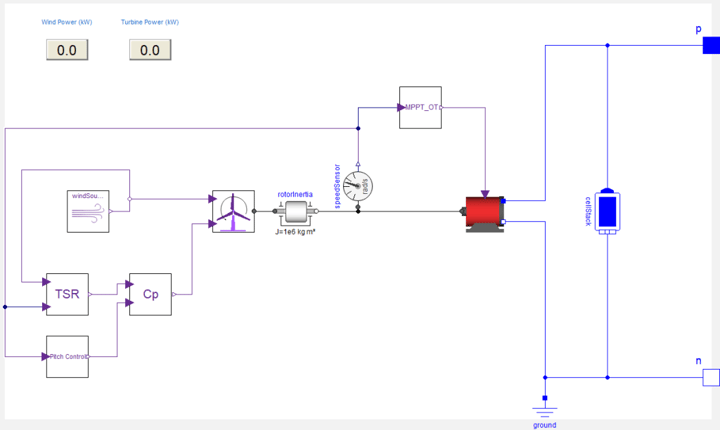
Figure 1: The Model of the System of Wind Turbine
List of components
Mechanical Componets
- Wind Source
- Turbine (Including Inertia)
- Tip Speed Ratio (TSR)
- Pressure Coefficient (Cp)
Electrical Components
- DC Generator
- Battery
Control Components
- Pitch Angle
- Maximum Power Tracking Point by optimal torque (MPPT_OT)
The wind source refers to the incoming wind that interacts with the turbine. The energy available in the wind depends on its speed and density, with higher wind speeds containing more kinetic energy. In our model, we have included four different wind speed levels to represent real-world variations. The turbine is the main component of the wind energy system, consisting of blades mounted on a hub. When the wind blows, it transfers its energy to the blades, making them rotate. In our model, we have simplified the turbine's behaviour using empirical power calculations. This allows us to analyse how it performs under different wind conditions and optimise its design for better efficiency.
The mechanical power is calculated as
Pm = 0.5 rho pi R^2 v^3 cp(lambda, beta) (1)
where rho is density of air, R is turbine radius, v is the speed of wind and cp is power coefficient which is function of lambda (Tip speed ratio) and beta (blade pinch angle).
The turbine model calculates power by using equation (1) and converts it into torque.
Turbine Torque is obtained as
T = Pm / omega_r (2)
where T is torque generated by the turbine model and omega_r is angular speed of the turbine shaft.
To calculate the mechanical power generated by the turbine over time using equation (1), the power coefficient cp is required.
Cp = 0.5(lambda - 0.022 beta^2 - 5.6) * exp(-0.17 lambda) (3)
lambda = omega_r R / v (4)
Topt = Kopt omega_r^2 (5)
Kopt = (0.5 rho pi R^5 Cp_max) / lambda_opt^3 (6)
Results
The Wind Power model was tested using four different wind sources, and the results are illustrated in figure 2.
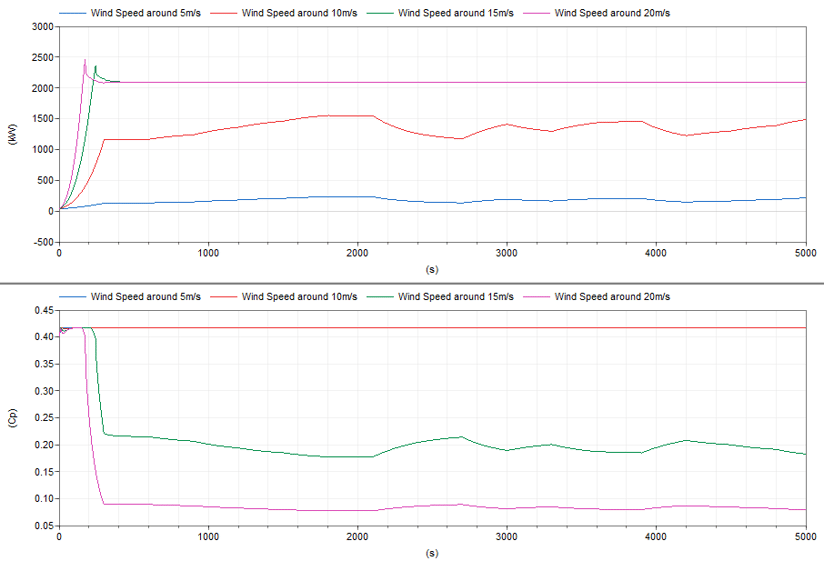
Figure 2: Mechanical Power generated by the turbine
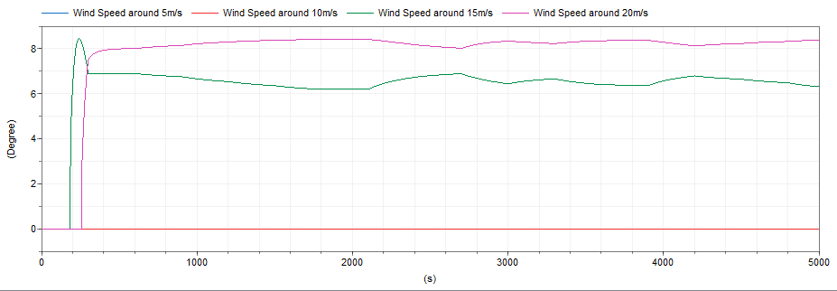
Figure 3: Pitch Angle variation
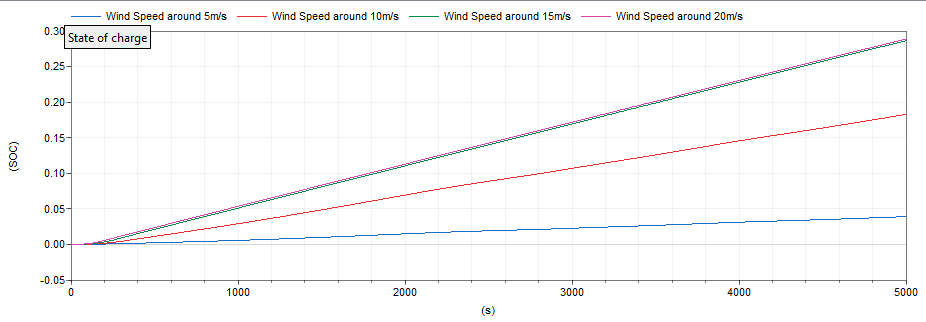
Figure 4: Changes in State of the Charge (SOC) of the Batteries.
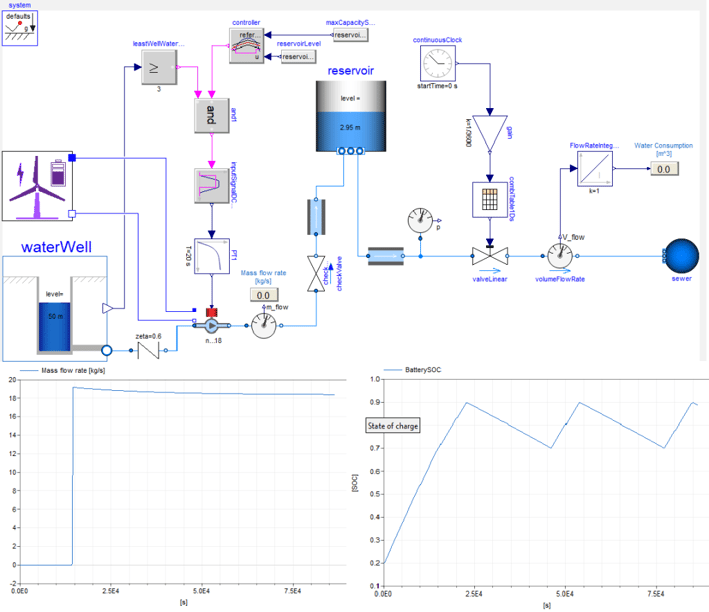
Figure 5: Implementation of the Wind Power into the System of Water Pumping from the Well
Conclusion
In this blog post, we presented a basic model of a wind turbine system using Dymola, which integrates mechanical, electrical, and control components.
The results demonstrated that as the wind speed increases, the mechanical power generated by the turbine increases exponentially.
Finally, if a more detailed wind turbine is required, the Wind Power Library is available for Dymola.
Written by: Kadir Sahin - Project Engineer